… e che ci vuole?
With Claudio del Principe
at Hotel Ansitz Plantiz
Claudio Del Principe has never seen a culinary school from the inside. Yet, he inspires Michelin-starred chefs. One might find that surprising. Del Principe himself doesn't really see it that way.
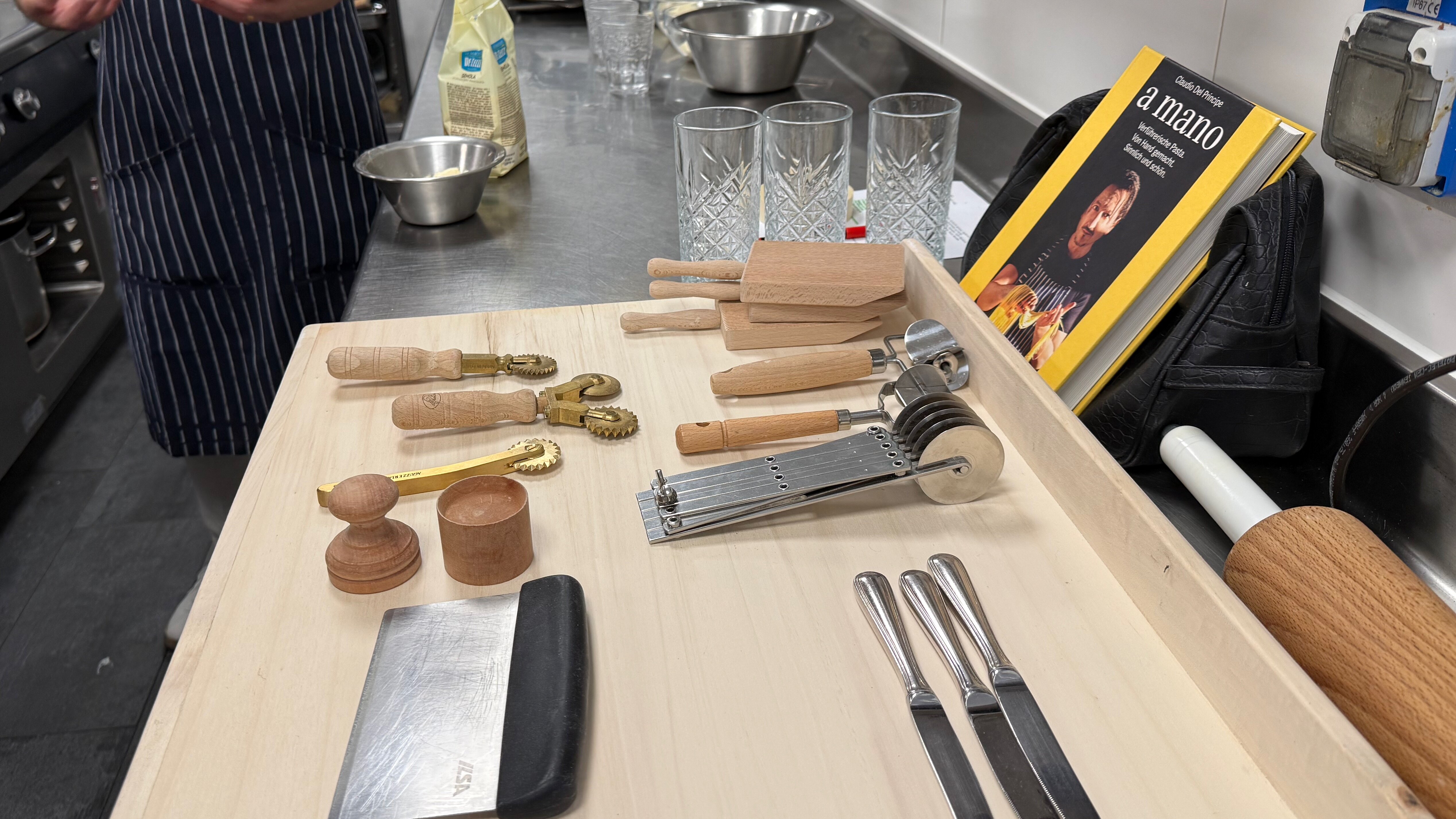
He completed his apprenticeship in the fashion industry. Through roundabout ways, he landed in advertising at a time when there was no formal training for copywriters—he obtained that years later. He never learned to cook. But writing? Absolutely. And very successfully so. His book titles are minimalist yet full of meaning: "a mano", handmade pasta; "al forno", with dishes from the oven; or "all'orto" and "a casa"... just two words, yet extremely significant for the content.
NOTHING COMES FROM NOTHING – OR DOES IT?
For Del Principe, skill doesn't depend on a title, but on dedication. His mother cooked every day until her 90th year with great passion, even if just for herself. Yet, to him, she was never an amateur cook. She simply wanted to bring joy to others. And that, he says, is exactly what drives even the best top chefs, whether they have a diploma or not.
"There are only passionate people and people who do their job, but with less passion," he says. "Whether someone is a professional or not isn't even that relevant." A sentence that quite a few kitchen brigades should frame and hang on their wall.
Then came 2007, the beginning of it all. The scene: A coffee break in an advertising agency, a graphic designer colleague with whom Del Principe is once again talking about food instead of football. The others at the table are annoyed. Men talk about other things, don't they? Out of the mockery, a joke is born—they must be addicted to cooking, in need of a self-help group, like Alcoholics Anonymous. The joke gets a website. It's called "Anonyme Köche" (Anonymous Cooks). Long before anyone knew the word "food blog."
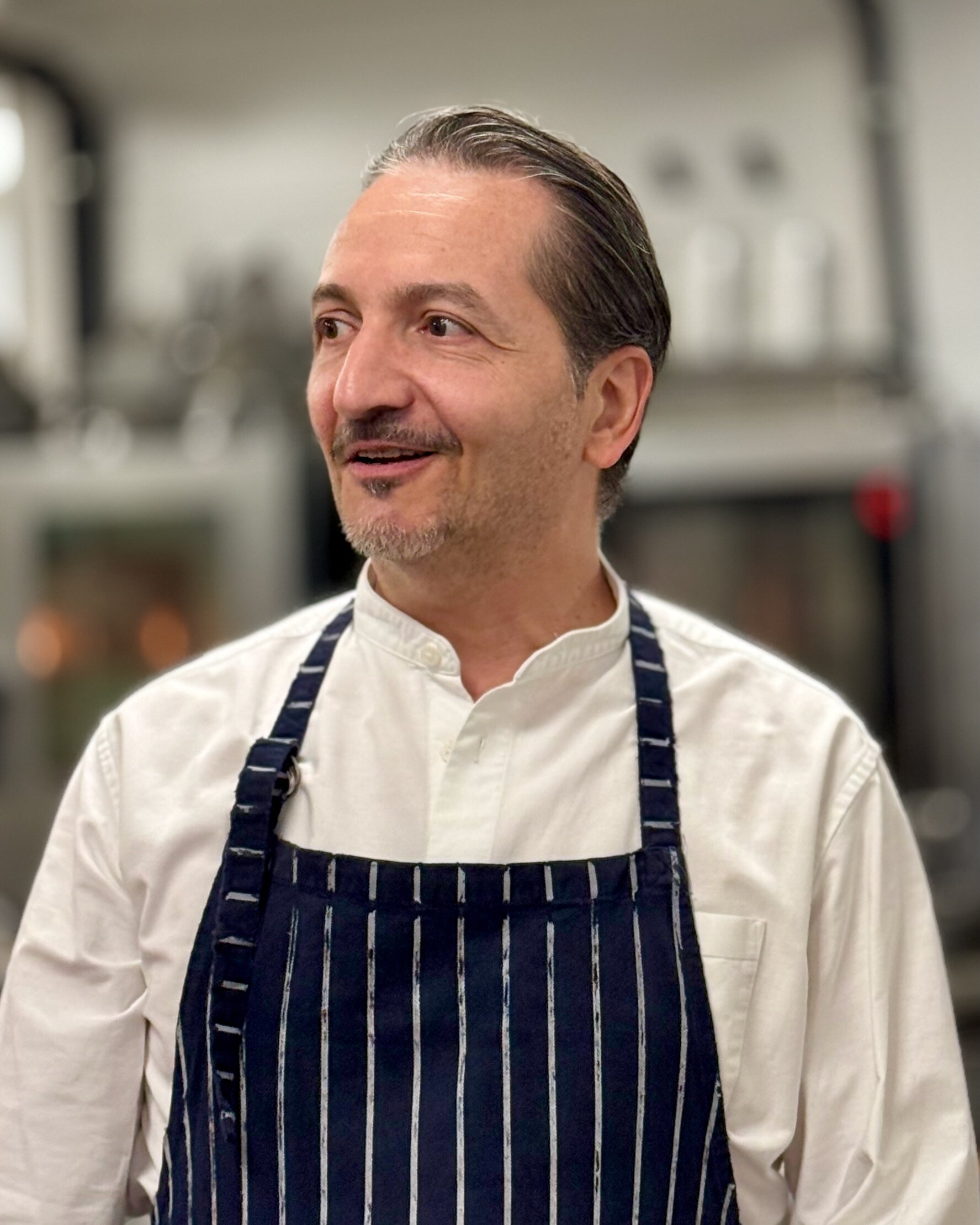
Originally, he had something else in mind: a radio show about food where there would be no sizzling or hissing. No "I cook faster than you," no battle arena—instead, a conversation as natural as a talk show about politics or the economy. Nothing came of the radio show, but everything came from the blog.
In the beginning, a photographer and the aforementioned graphic designer also contributed. At some point, both said: You write better. You do it. The baby was suddenly his alone. The power of words—one can find this phrase banal until experiencing firsthand how true it turns out to be.
If 2007 were today, he suspects, the format wouldn't be called a blog, but TikTok. Except that what bothers him about today's platforms is precisely what used to bother him about TV cooking shows: interchangeability. He usually finds the accounts with the most followers to be the most boring. Fast trends without discernible value, leading to sheer emptiness after the tenth video. He prefers watching a top chef on YouTube for an hour talking about their recipe. About producers. About technique. Depth instead of speed, if you will.
If 2007 were today, he suspects, the format wouldn't be called a blog, but TikTok. Except that what bothers him about today's platforms is precisely what used to bother him about TV cooking shows: interchangeability. He usually finds the accounts with the most followers to be the most boring. Fast trends without discernible value, leading to sheer emptiness after the tenth video. He prefers watching a top chef on YouTube for an hour talking about their recipe. About producers. About technique. Depth instead of speed, if you will.
HIS MOTHER WAS ALWAYS RIGHT
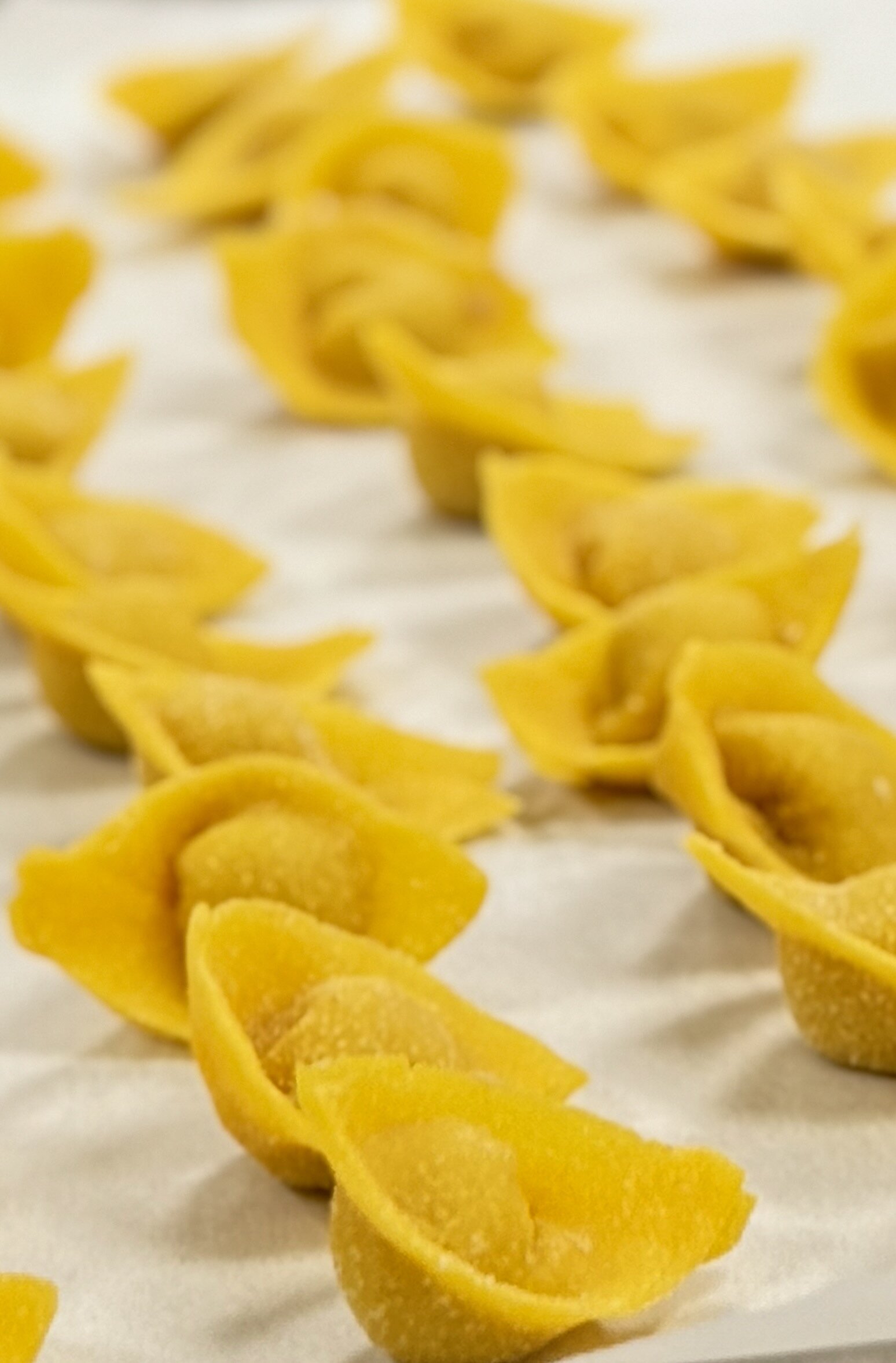
Anyone who wants to understand how Del Principe works cannot overlook his mother. Half past eleven, the family is visiting, and she still asks which pasta should go with which sauce. Nevertheless, a meal is served right on time, as if she had spent the entire day preparing it. To his objection that it was already half past eleven, her only response was: "E che ci vuole?" No worries.
That sentence became a philosophy of life. Don't talk, just do.
That is also how his books come to life—embedded in everyday life, not bound to a production schedule. Around six months per book. He cooks with his family, a dish suddenly fits into the current project, a plate is plated more nicely, placed by the window, and photographed. In the afternoon, the recipe. Then, sometimes, two weeks of nothing. And then suddenly four recipes in a single day.
Many of his publisher colleagues work in teams—stylist, photographer, chef, recipe writer—and move into a photo studio for two weeks, cooking through a dozen dishes every day, done. Del Principe hates that just hearing about it. Planning gives him anxiety. After all, he might forget something.
His first book, a cooking journal published by AT Verlag, traces back to a single sentence from his former publishing manager, Boris: "How about you just start on January 1st?" Daily notes on products, producers, recipes, and the question of where our food culture is heading. That became the framework for the eight books published since then— "Al Forno", "All'Orto", "A Mano", "A Casa" and their siblings. Eleven cookbooks are now on the shelf. The twelfth is coming in autumn 2027.
His best ideas, he says, don't come to him at his desk anyway. They come on the train. No calls, no emails, just looking out the window. After the first hundred meters, the mind clears—and then, bam, he can write.
GRANDMOTHER'S KITCHEN, REIMAGINED
In the early years of "Anonyme Köche," it was still about the biggest knife, the sharpest, the most expensive steak. Men's topics, Del Principe himself says with a laugh. Only over time did the actually more interesting question come to the fore: Where does the food come from? Who produces it, and under what conditions?
His credo today: Let's cook like our grandmothers again. After all, they did everything right. They bought seasonally, often directly from the farm. Never produced food waste. Always cooked fresh. Made preserves when there was too much cabbage in autumn. Conjured ten dishes out of a single ingredient. For him, that isn't nostalgia—on the contrary, it is contemporary food culture.
Viewed this way, the vegetable book "All'Orto" is a father-son book. His retired father in Italy tended his own garden. After all, every Italian says: Don't go to the supermarket to buy vegetables, it's all "chimico"—chemistry. But it's not just about taste, Del Principe believes. Anyone who has their hands in the soil every day in their old age is also grounded. In a literal and figurative sense—forgive the pun.
He isn't a complete apostle of abstinence in this regard. Quality is a must, of course. Just without the circus. Flying in the best carabinero from the coast, as some top chefs do — he finds that pure nonsense. His standard is more modest and, if you will, more honest: take the best that is available right here.
NIKO ROMITO AND THE PURSUIT OF DEPTH
Why do so many of Italy's finest chefs come from the South? The sun, people like to say, simply ripens the lemons of Amalfi and the tomatoes of San Marzano differently. Del Principe merely shrugs at this explanation. Not everyone operates that way. There are plenty of three-star kitchens in Italy that could just as easily be cooking in Los Angeles or Tokyo—serving the finest fish, the rarest shellfish, top-tier truffles, and prime caviar, all flown in from around the globe. It’s an approach that leaves him more saddened than impressed.
His counterexample: Niko Romito. Self-taught, without a single year of culinary apprenticeship under his belt, but with an unfinished economics degree in Rome—abandoned when his father fell ill and the family intended to sell their bakery and small restaurant. What was meant to be a sale turned into a fresh start. First, second, third Michelin star—achieved using ingredients sourced exclusively from the Abruzzo region, just a thirty-minute drive from Del Principe’s own hometown of Pescasseroli.
Romito calls his philosophy “vertical cooking.” A single ingredient—say, a zucchini—is processed, reduced, freeze-dried, and dehydrated over and over until ten distinct states form a single dish. No molecular gastronomy, no theatrical show, no spheres on a plate. Visually, it remains a humble zucchini. Only upon tasting it do you realize the sheer complexity of textures and temperatures hidden within.
Perhaps that is the true connection between the chef who never formally learned to cook and the writer who never attended culinary school. Both are far more interested in the depth of a subject than its surface. One with a zucchini. The other with his sentences.
WE DON'T DRINK ALCOHOL, WE DRINK WINE
Claudio Del Principe's commentary is widely sought after by major newspapers and magazines. In his columns, he rarely pulls punches—as evidenced by his recent take on wine culture. Prompted by WHO guidelines stating "there is no safe level" of alcohol consumption (or essentially: don't drink wine, it will kill you), his retort was swift:
"We don't drink alcohol; we drink wine. Please—this is 8,000 years of culture. Behind it are hardworking people who understand the soil, who understand plants, and who craft an honest product. Stop demonizing it!" He fondly recalls his grandfather and parents, who accompanied every meal with a single glass of wine. Never more, never less—free from excess or drama. They worked hard, tended the garden, took their time, and ate in peace. A balanced life, everything in moderation. But that glass of wine was sacred.
That doesn't mean every meal requires an alcoholic pairing, however. While Del Principe has yet to be impressed by non-alcoholic wines, he finds fermented beverages exceptionally well-suited for food pairings. They aren't meant to mimic wine, but they offer a thrilling alternative. Crafting them demands master-level precision so that the ingredients harmonize over days, reaching peak maturation just as the glass is poured for the guest.
.jpeg "img_2829-(1).jpeg")
EYE-TO-EYE WITH TOP CHEFS
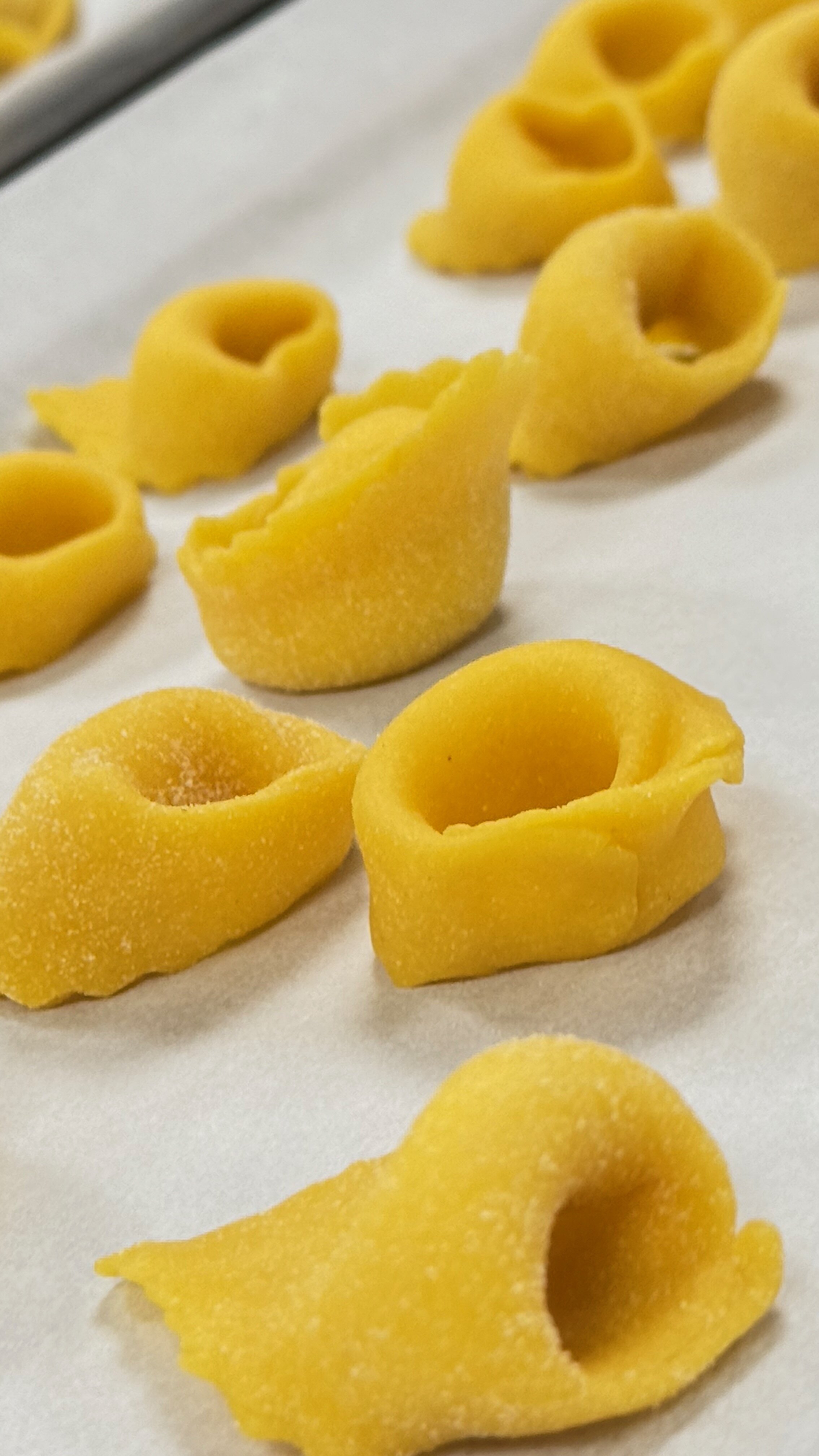
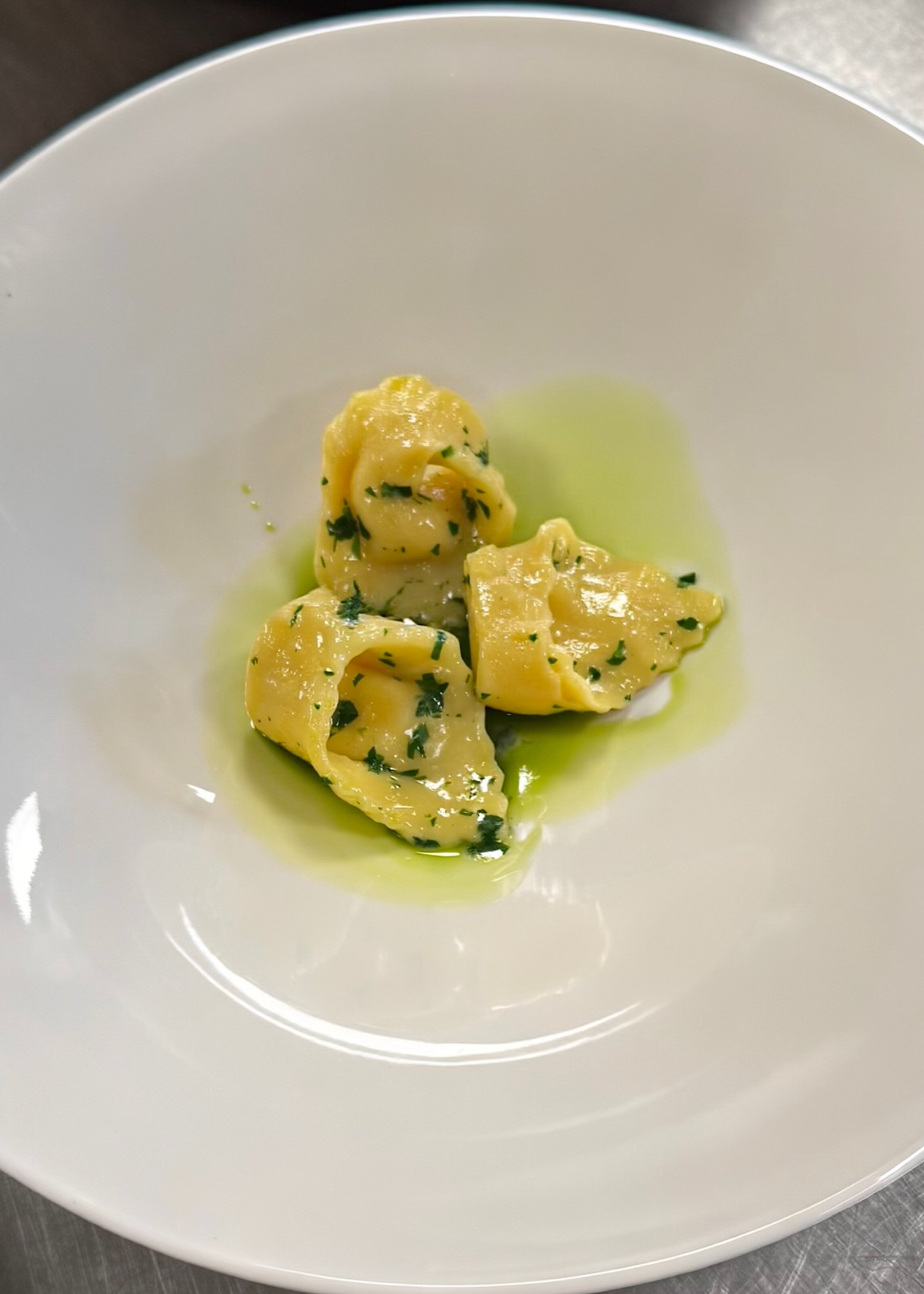
So why does Claudio Del Principe captivate world-renowned chefs? Why did Tanja Grandits invite him to lead bread and pasta workshops at her iconic restaurant Stucki in Basel? Antonio Colaianni, head chef at Ristorante Ornellaia in Zurich, knows his books and offers a clear answer: Del Principe wins people over through uncompromising quality. Recorded with painstaking precision, his recipes overflow with an emotional resonance that readers simply cannot resist. The same goes for his photography: stripped down to the essence, free of superfluous garnish—no foams, no tweezers. Just pure, unadulterated food.
“E che ci vuole?” Del Principe’s mother used to say whenever a task seemed effortless to her. What’s the big deal? In her son's case, as it turns out, quite a lot goes into it. But when true passion takes over, it suddenly feels completely effortless after all.
Sources:
- Claudio Del Principe: Der Amateur, der die besten Köche inspiriert – Gastro Journal
- Claudio Del Principe – Autor – Valentinas Best of Cookbooks
- Cucina Povera: Drei leckere Rezepte von Claudio Del Principe – Blick
Photo:
- Hotel Ansitz Plantiz (Header)
- Siteofwine.com
© Copyright Siteofwine.com