NICOLA VULAI UND SEIN X-WINEGLASS
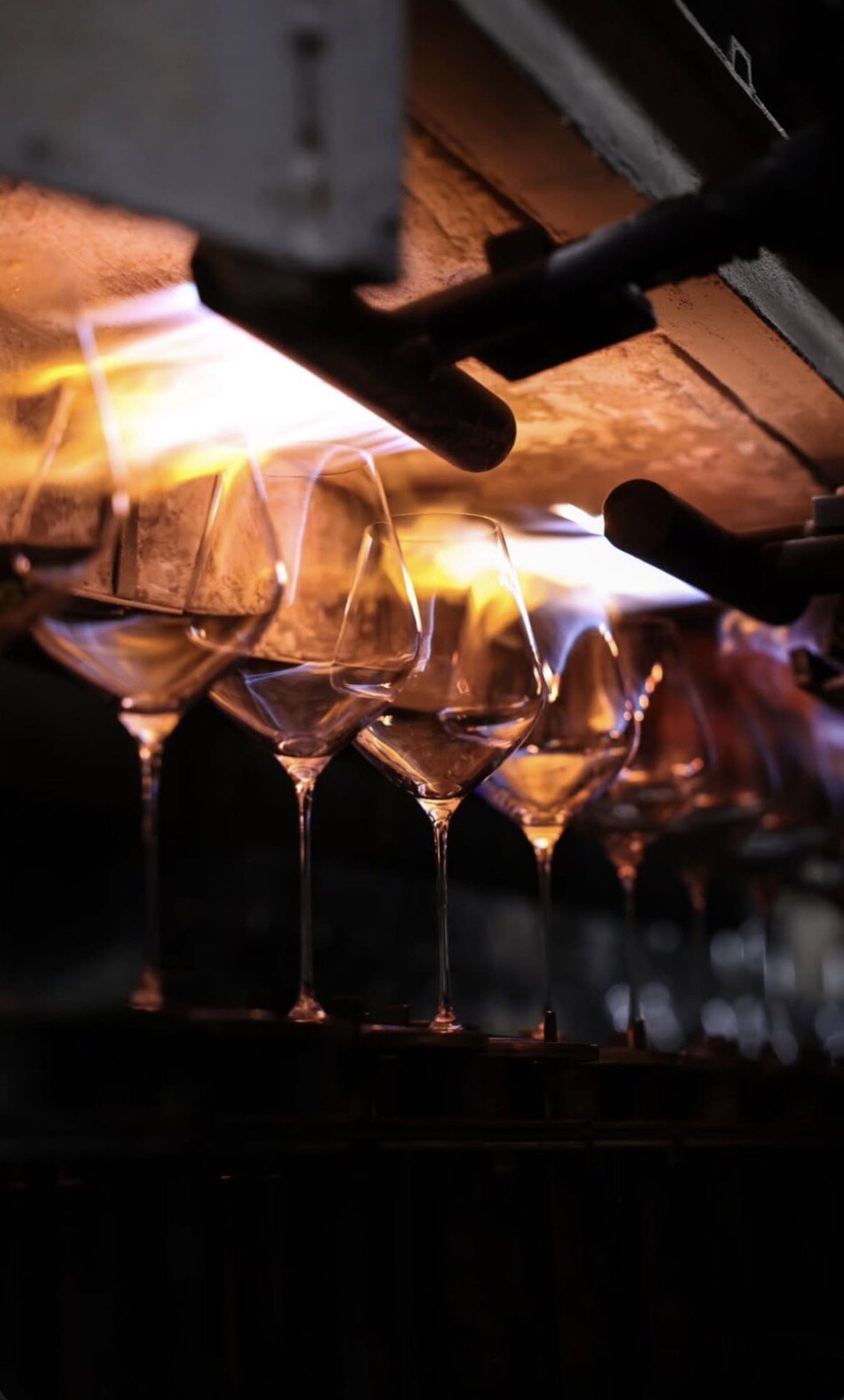
One glass for everything? What might cause some purists to frown is, for Nicola Vulai, the culmination of decades spent between vineyard rows and glassworks. With X-WineGlass, the entrepreneur has developed a wine glass that aims to impress not through flourishes, but through functionality—hand-blown in his own factory in the Czech Republic.
ONE COMPANY, THREE ADDRESSES
Anyone taking a closer look at X-WineGlass will initially stumble over its geography. An Italian branch, corporate headquarters in Austria, production in the Czech Republic—three separate companies? Not at all. “It is, of course, one company with three different addresses,” clarifies Nicola Vulai. The glassblowing takes place in the Czech Republic, while sales, marketing, design, and personalization are handled through Austria. And the main warehouse is located in Terranuova Bracciolini in Tuscany, supplying the entire Italian market. The reason is as simple as it is logical. If a two-star restaurant orders 48 glasses in the morning, shipping them from Austria would simply take too long—and be too risky. Breakage and delivery costs would be a major issue.
BRAND IS NOT SYNONYMOUS WITH MANUFACTURER
What many wine lovers do not know: mouth-blown wine glasses are rarely crafted where the big-name brands are headquartered. The actual glassworks are located primarily in the Czech Republic, Slovakia, Poland, and Hungary. Many well-known brands are brand owners, not manufacturers—contracting production here today, there tomorrow. As a result, the exact same shape can vary from batch to batch.
At X-WineGlass, things are done differently. The facility in the Czech Republic, formerly known as Sklárna Barbara and renamed in 2019, is owned by the company. Every single glass comes from one and the same glassworks. Until now, the plant has also produced for competitors, but starting in 2027, Vulai is shutting off the tap—from then on, only their own line will come off the assembly line—or rather, off the blowpipe.
Why is this so crucial? Because every glassworks has its own proprietary blend of quartz sand, boron, and other minerals. The shape can be copied, but the raw material cannot. "Especially when it comes to premium wine glasses, the material is more important than the shape—and how you handle that material."
IN THE BEGINNING THERE WAS A QUESTION
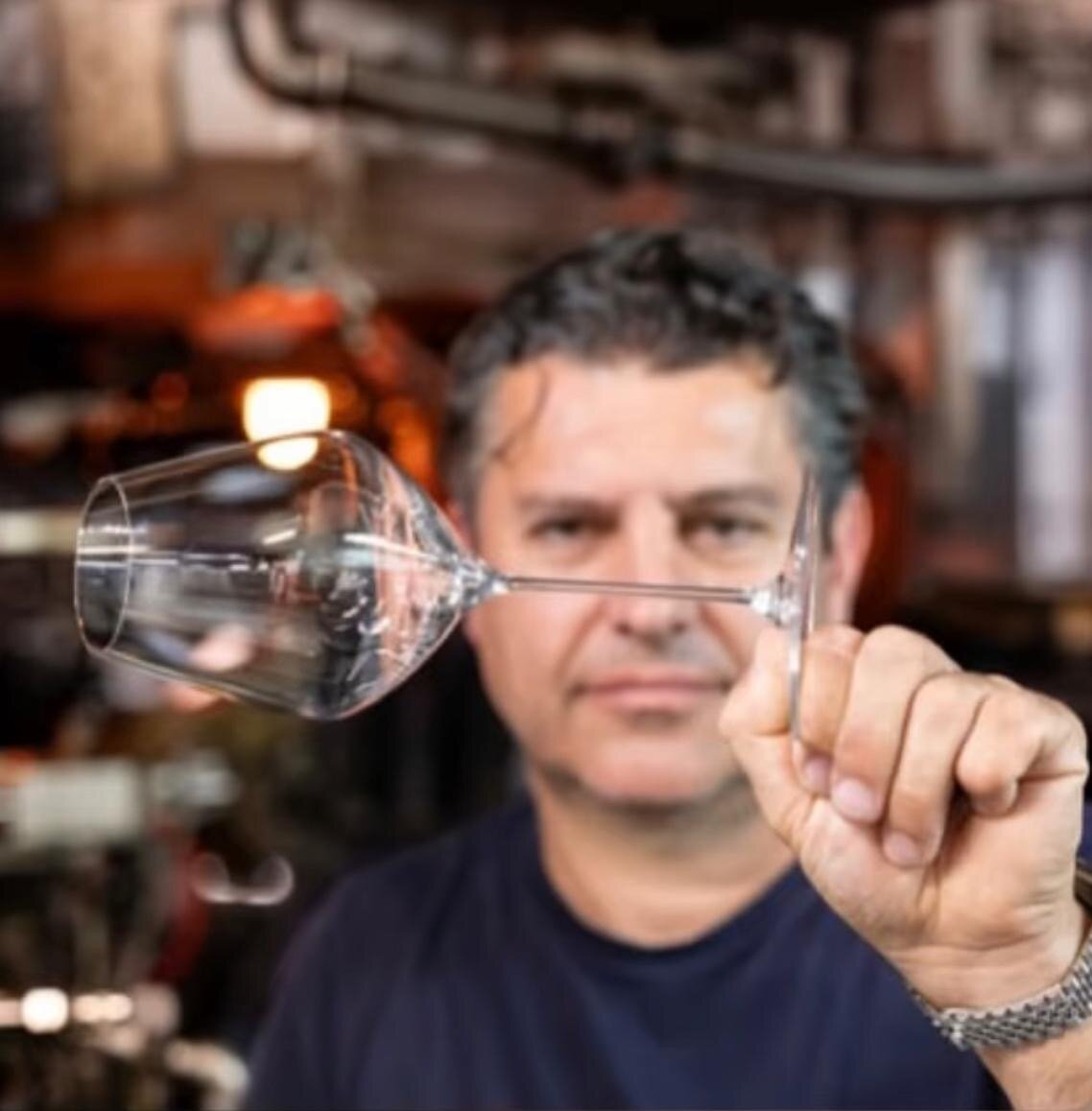
Vulai has been involved with wine glasses since 2009. Prior to that, he had created and sold other brands spanning from Asia to Austria and Italy. However, the true spark for the X project came from a purely personal question. Looking at their overflowing glassware cabinet—sparkling wine, white wine, red wine, dessert wine, plus beer and the obligatory digestif—his wife wanted to know: Is there not a single glass that you can pour everything into?
The thought stuck with him. In 2019, a year before COVID-19, he was sitting with a group of wine experts in Tuscany, including Luca Gardini, and the question was brought up once again. Along with it came the traditional dogma that every grape variety requires its own specific glass. Vulai disagrees. A lean Riesling from the Wachau, an opulent, barrel-aged Riesling from Germany, a Riesling from South Tyrol—three entirely different wines. "You have to think more in terms of styles," he says. Even the label "Burgundian" has long been overused: even in Burgundy, there are powerful, dark Pinots that have little in common with the delicate finesse of a Domaine Roumler from Chambolle-Musigny.
Knowing both worlds is his trump card. Vulai attended agricultural school, runs the Azienda Agricola Vallone winery in the Marche region inherited from his mother, and presses his own wine. The glassware came only years later. "Most people who make glasses know nothing about wine, and those who know about wine have no experience with glass."
THE RIGHT GLASS FOR EVERY WINE
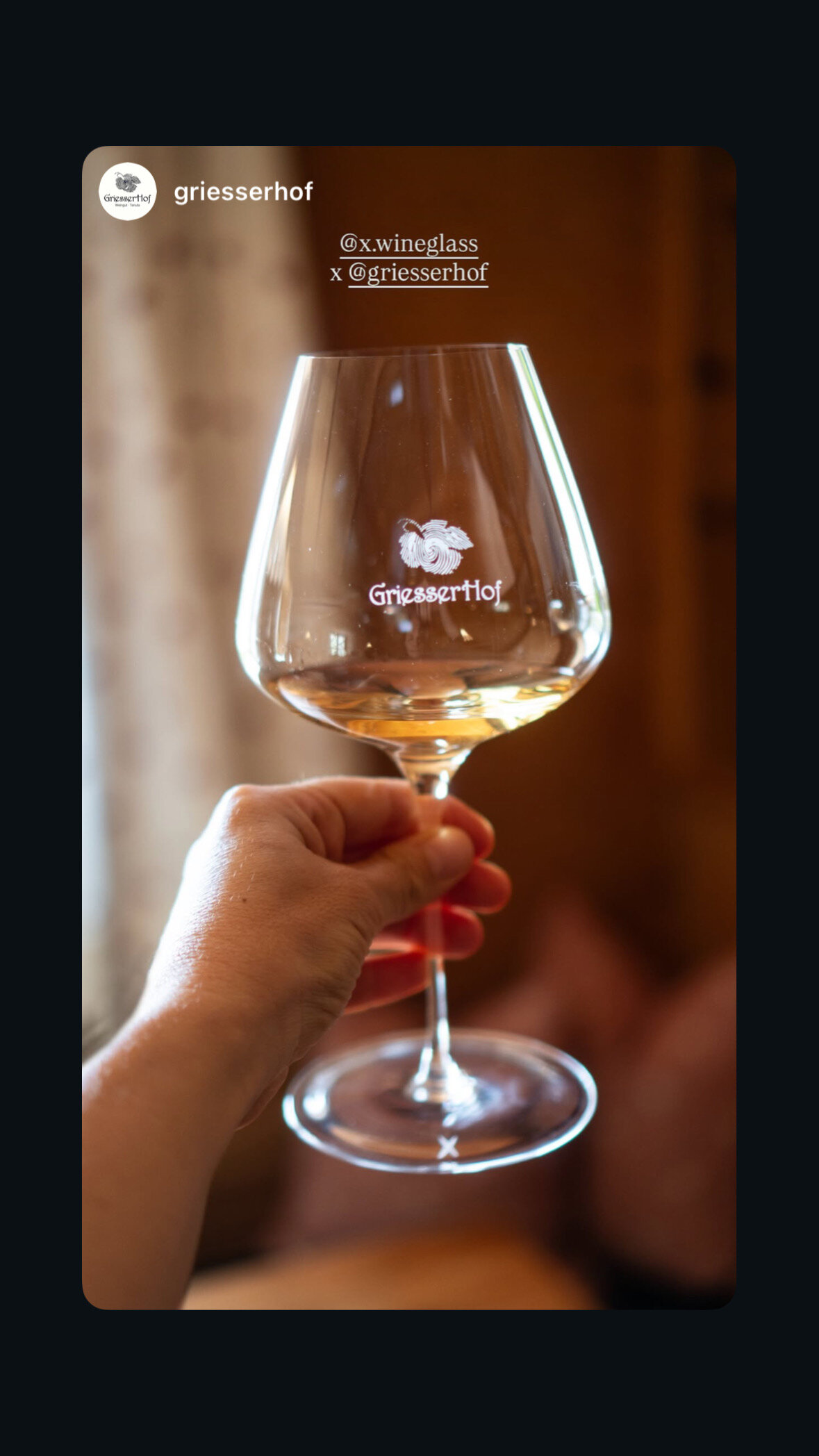
Before diving into Vulai’s answers, it is worth taking a look at the basics of glass culture—those fundamental rules that feature on the curriculum of every sommelier course. As a general rule, a wine glass must be colorless, thin-walled, and transparent, without patterns or engravings, whether made of standard glass or crystal glass. Only then can the wine be evaluated without distortion. The colorful, cut crystal goblets from grandmother's display cabinet may be valuable antiques, but they are useless for a professional tasting. A long, slender stem provides elegance and serves a very practical purpose: keeping the hand away from the bowl so as not to warm the wine unnecessarily. The shape of the bowl and its opening, in turn, determine how much air the wine receives and how its aromas reach the nose. This leads to a classic rule of thumb: the more body, the fuller the bowl. Young, fresh white and rosé wines, as well as light reds, benefit from a narrow bowl or a slight tulip shape so that their delicate, floral-fruity aromas do not dissipate too quickly. Mature, full-bodied, and smooth white wines belong in a slightly rounder bowl. Medium-bodied red wines and barrel-aged white wines—such as those aged in barrique—demand even more volume and aeration. Finally, full-bodied, mature, and complex red wines require large, very full-bodied glasses: plenty of air so that the bouquet and personality can fully unfold. So much for the textbook. But this is precisely where Nicola Vulai comes in.
IT COMES DOWN TO THE MILLIMETER
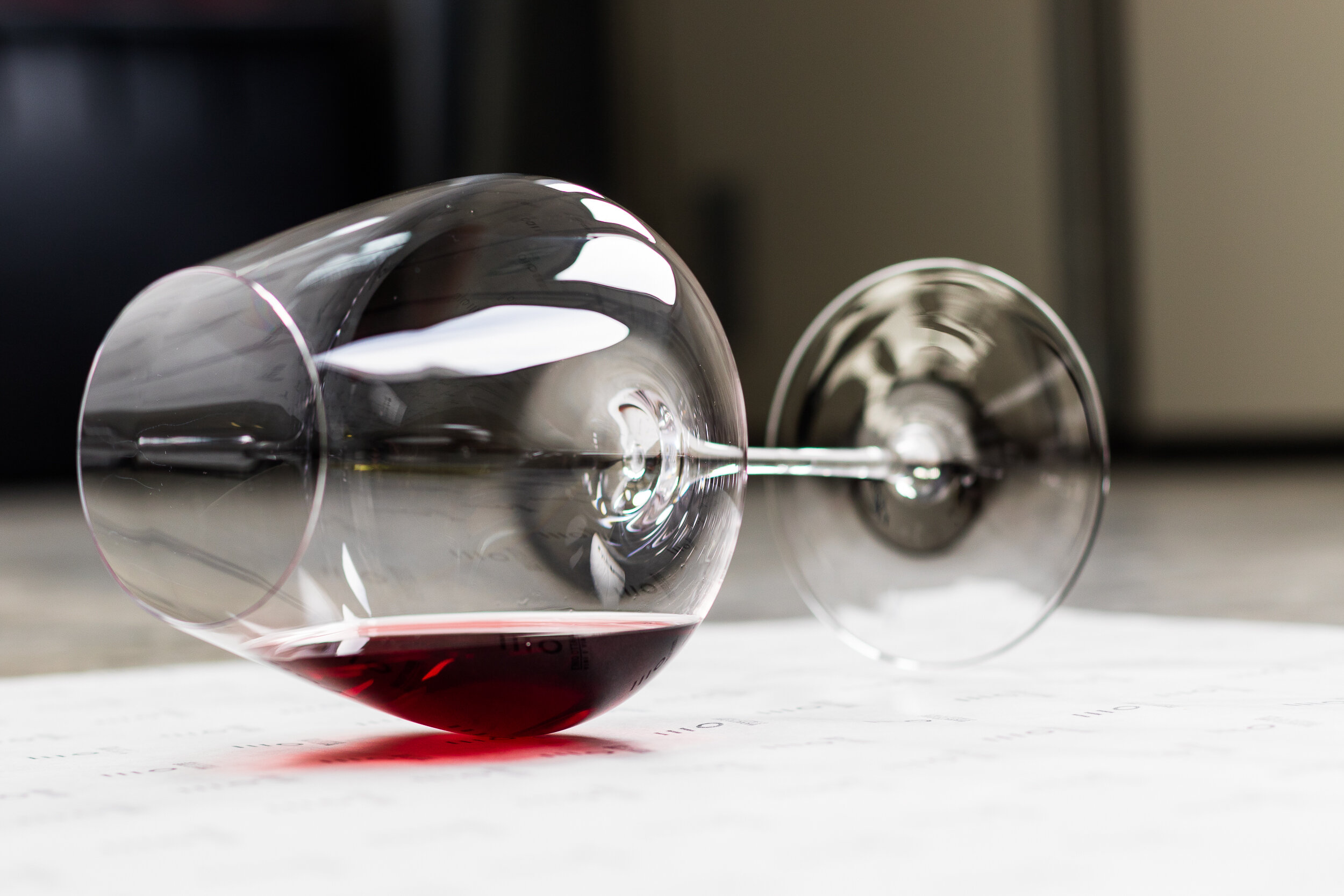
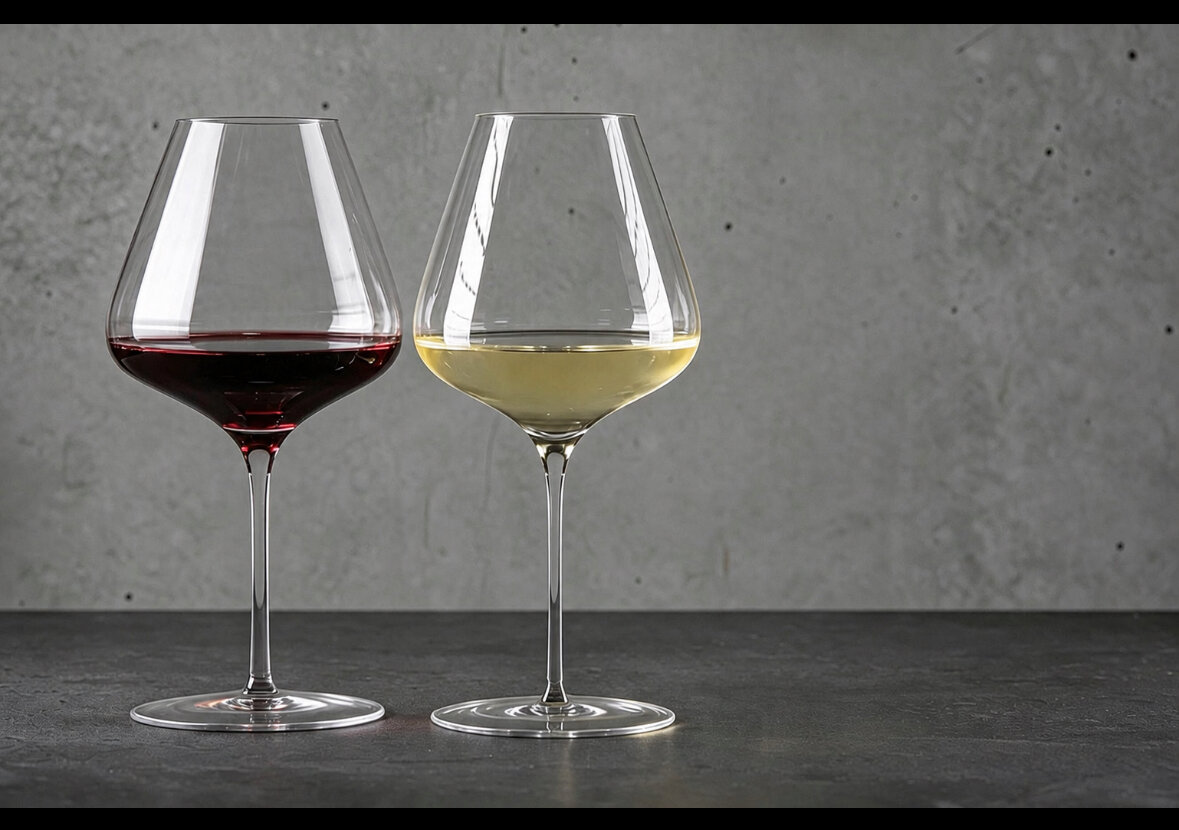
What, then, makes a good glass? Not the silhouette, says Vulai, but the function. Where does the wine hit the palate? What angle of entry is created when drinking? And above all: how tall is the bowl? A trained eye recognizes a beautiful shape immediately. However, hardly anyone notices if a glass is one or two centimeters shorter. Yet that is precisely what is crucial. Volatile acids, total acidity, and tannins gather in the bowl; as you swirl, alcohol and aromas rise—and they must be able to escape. If the bowl is too tall, they remain trapped. The bowls of older glass generations, often over ten and sometimes up to 18 centimeters high, hardly suit today's winemaking style with spontaneous fermentation and the absence of cultured yeasts. Natural wines with skin contact and youthful tannins demand something more akin to a grape-must glass: shorter, placing the nose directly over the wine. Added to this is an ultra-thin rim against which the aromas burst open. Vulai tested for himself just how much a few millimeters can do. He had a common universal glass—long his reference glass—shortened by four millimeters in production. The wine in the glass was identical. The perception was not. "Something takes place there. Even if it is minimal, the effects are real."
EDGES AND ANGLES
In addition to the height, the contour also plays a role. Curves make a wine rounder, while edges and sharp angles emphasize acidity—a principle already mirrored in the classic bottle shapes of Burgundy, Bordeaux, and the Rhine. Vulai goes so far as to offer winemakers mouth-blown bottles made from the exact same sand blend as his glasses. He is convinced that in ten or 15 years, the wine would develop differently. A question of cost, to be sure. But a fascinating one. For all his passion, he remains a realist. The glass is merely the tool, "the mirror of the winemaker's craft." An honest glass also reveals flaws. An overripe wine made from partially rotted grapes seems jammy and masked in a round glass, whereas in the X-Original, it fails the test. Vulai therefore advises every winery to test its own wines using different glasses—even if his own doesn't win in the end. He gives South Tyrol's wines a glowing review: work there is conducted in a very clean, modern fashion.
HANDS-ON TERROIR
The latest project leads to Italy. Once again, the foundation is the X-Original. Right after blowing, while the glass is still hot and malleable, a piece of rock is pressed into the base—Etna basalt, Dolomite limestone, or slate. The lava glass is not intended for everyday use, but rather for press and tastings. The question behind it: How does a Riesling change when it meets limestone? Vulai’s answer is concise: "In fact, it always tastes different."
EXCLUSIVE, BUT NOT OUT OF REACH
When it comes to marketing, X-WineGlass intentionally holds back. Giving away glasses left and right, as some start-ups do, is out of the question for Vulai—exclusivity would suffer as a result. For the restaurant and hotel industries, however, there is a way: the glasses can be rented for events.
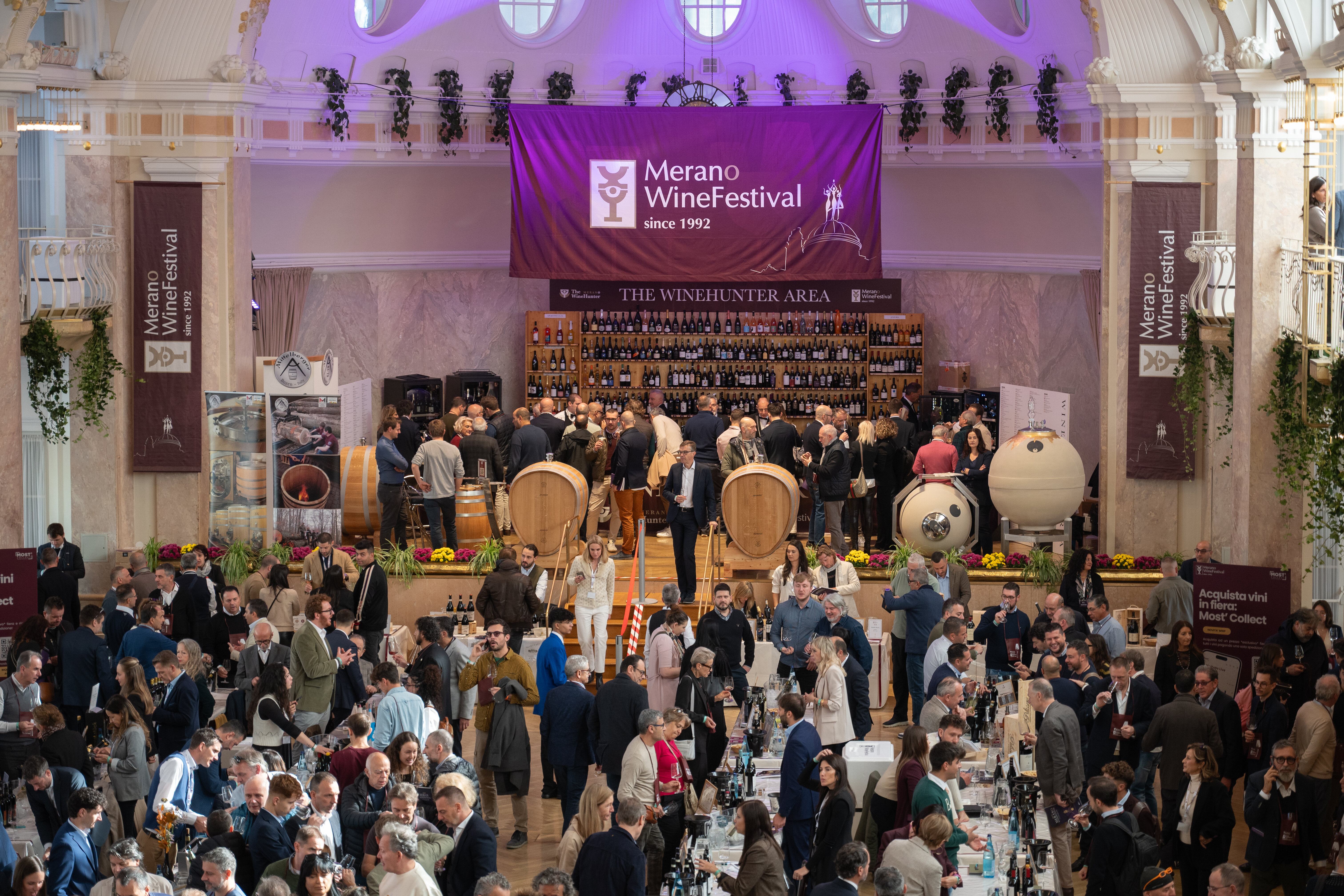
Anyone wanting to hold them in their own hands will soon have the opportunity. At the Merano WineFestival at the beginning of November, Vulai will be there on site, as he has been for years.
And anyone who takes a look into their own glassware cabinet after reading this may suspect: Sometimes less is more. Mrs. Vulai, at any rate, should be pleased.
© All rights reserved
PHOTO: © xwineglass.com