35 YEARS AND NOT A BIT TIRED
When early November autumn fog settles over the Passer and the spa promenade slowly grows quiet, the Kurhaus in Merano is buzzing. From 6 to 10 November 2026, the Merano WineFestival celebrates its 35th edition – with the first top scores in its history, a gaze far into the future, and a greeting to Tokyo.
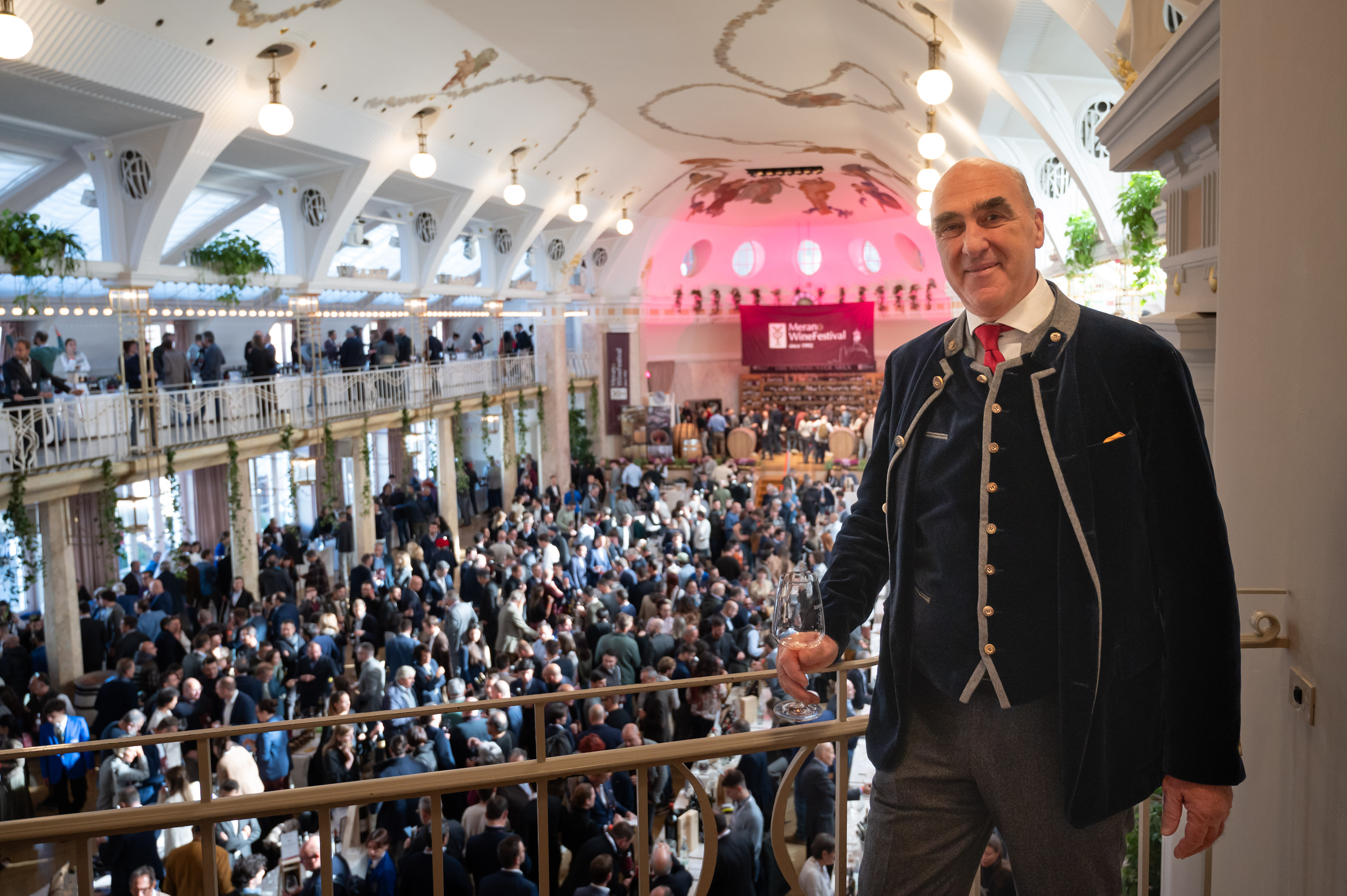
Since 1992, Helmuth Köcher – long known in the trade simply as “The WineHunter” – has turned the Art Nouveau building on Freiheitsstraße each autumn into a meeting place for winemakers, sommeliers, traders and wine lovers from all over the world. People know each other. People meet. And they taste what the tasting panels of the Guida The WineHunter have deemed worthy over the year.
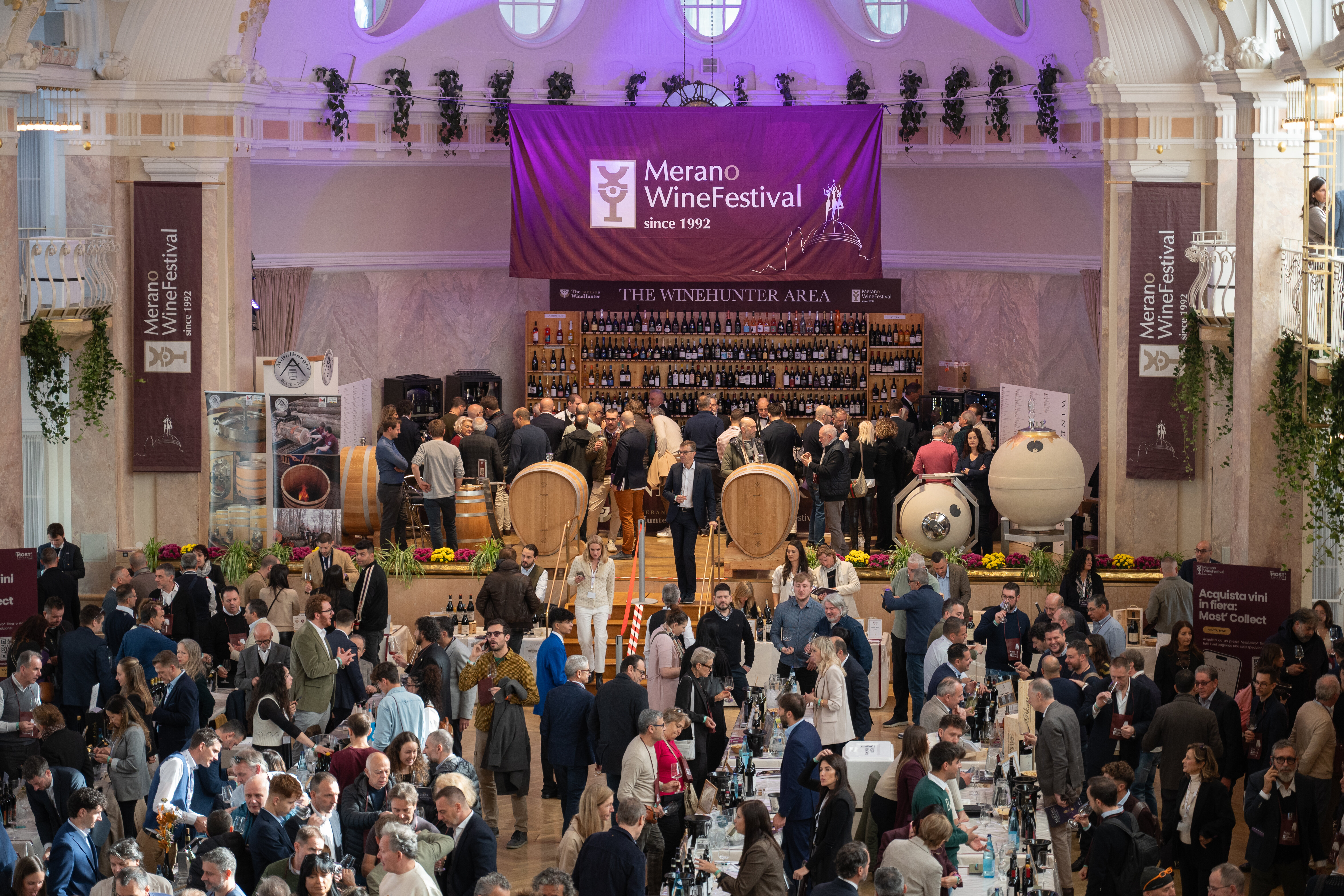
The figures for the anniversary edition speak for themselves: 810 businesses, more than 2,600 products to taste, and over 100 producers from twelve countries – from Georgia and Azerbaijan via Lebanon and Moldova all the way to Brazil, Argentina and South Africa. For context: last year the festival counted over 8,000 visitors, including more than 3,000 trade visitors and 150 buyers from 32 countries.
How much confidence can a festival allow itself after 35 years? Apparently quite a lot. This year the programme was presented not in Merano, but on 7 October in the Italian Senate in Rome. There, Senate Vice President Gian Marco Centinaio promptly declared Merano, during the festival days, the wine capital of Italy. The guiding theme of the 35th edition is deliberately timeless: elegance and beauty – that harmony of balance, care and patience which, according to Köcher, marks great wine just as much as high-quality food.
A LOOK INTO THE FUTURE
The most far-reaching novelty will only take effect after the festival: From 2027, the Merano Wine Observatory is set to serve as a year-round platform linking producers, experts, the trade and institutions. The aim is to gather data, share experience and spot trends before they turn the market upside down – in an industry currently being thoroughly shaken up, climatically and geopolitically alike. The five-day event is thus meant to become an observation post that keeps its eyes open all year long.
But there are premieres this year as well. The opening toast on Friday morning will be linked live with Tokyo, where the first Merano WineFestival Japan will take place at the same time. In the WineHunter Area, the Next Platinum selection makes its debut: It brings together those products that have reached the peak of their award category and are poised to move right to the top. Also new are the winners of the Gran Medaglia d’Oro at the Mondial des Vins Extrêmes – the Cervim competition dedicated to heroic viticulture on steep slopes and in mountain sites. South Tyrol naturally feels addressed by that.
And for the business side: The Italian foreign trade agency ICE has doubled the number of international buyers invited to Merano. Köcher himself sums up the thrust with a question: “How will wine be produced, sold, consumed and perceived in 5, 10 or 20 years?”
TOP SCORE: ONE HUNDRED OUT OF ONE HUNDRED
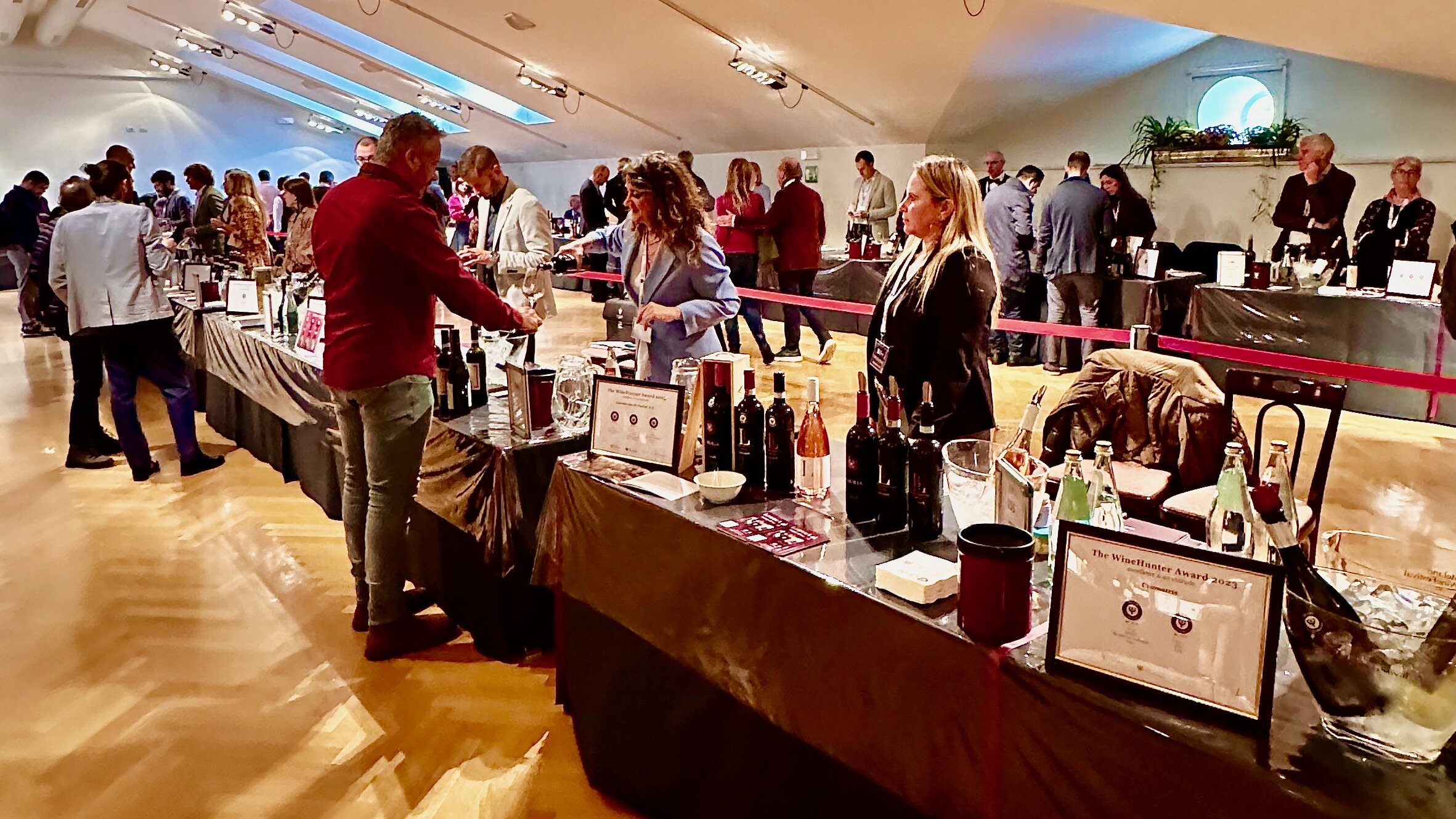
The WineHunter Award Platinum is reserved for products that score more than 96 points. This year, for the first time in the award’s history, the full score was given – four times. And it’s worth placing the four labels side by side:
- Ferrari Trento, Trentodoc Perlé 2002 – a mountain sparkling wine that shows Italian bottle fermentation can last for decades and hold its own against the greats of Champagne.
- Kellerei Terlan, Alto Adige Terlaner DOC Rarity 2013 – proof that a white wine from South Tyrol need not fear time, but can turn it into beauty.
- Attilio Contini, Vernaccia di Oristano DOC Riserva 1998 – made in an oxidative style, deeply rooted in old Sardinia.
- Avignonesi, Vin Santo di Montepulciano DOC „Occhio di Pernice“ 2012 – a meditation wine from Tuscan tradition.
Méthode classique, great ageworthy white, oxidative Vernaccia, Vin Santo: four styles, four regions – and yet one common denominator. Time. That Kellerei Terlan, a South Tyrolean estate, ranks among the first four will hardly surprise anyone here. Still, it will have been a pleasure.
In total, 101 Platinum Awards were presented in the categories Wine, Food and Spirits. The ceremonial presentation will take place on Friday, 6 November, at 4.30 pm at the City Theatre (Teatro Puccini), together with five Honour Awards and the tribute to the Cult Oenologists – nine oenologists selected by Köcher, including Riccardo Cotarella, Carlo Ferrini, Luca D’Attoma, Gianni Menotti and the late Franco Bernabei.
At the gala dinner in the evening, the five WineHunter Stars 2026 will follow: Roberto Cipresso (Winemaker Star), Beppe Palmieri, maître sommelier of Osteria Francescana (Wine Manager Star), TV food host Giuseppe „Peppone“ Calabrese (Wine&Food TV Host Star), Cristina Mercuri, Italy’s first Master of Wine (Communication Star), as well as, posthumously, Livio Felluga, whose Wine Artist Star will be accepted by his son Filippo. Also on Friday, Italy’s best Rieslings will be crowned: the Riesling competition enters its 20th round this year.
MORE THAN JUST TASTING
This year’s gala dinner on Friday evening is a journey through five regions and five expressions of elegance. The cooking is done in cooperation with Teritoria, a collection of more than 300 properties in Europe, whose Brand President is none other than Alain Ducasse. At the stove are Sara Bertocchi and Fabrizio Molteni (Frosch Restaurant), the Michelin-starred chefs Massimo Spigaroli (Antica Corte Pallavicina), Arcangelo Tinari (Villa Maiella) and Giacomo Devoto (Locanda de Banchieri), as well as Anna Ghisolfi, who is responsible for dessert.
Striking is how strongly this year’s cultural program is shaped by women. On Friday, Laura Donadoni presents the EU project “Grapes of Change” for more equality in the wine world. On Saturday, Camilla Lunelli presents her book “Un’arte di famiglia” – from development work in Africa back to the Trentino family business Ferrari – and Chiara Giorleo portrays in “Vino, donna” 90 female protagonists of change. In the evening, the Donne del Vino from Trentino–South Tyrol invite you to “Voci nei calici” at the Women’s Museum. Local color on Sunday comes from Mario Vacca with “L’Alto Adige in un calice. Vignaioli del Burgraviato” about the winegrowers of the Burgraviato.
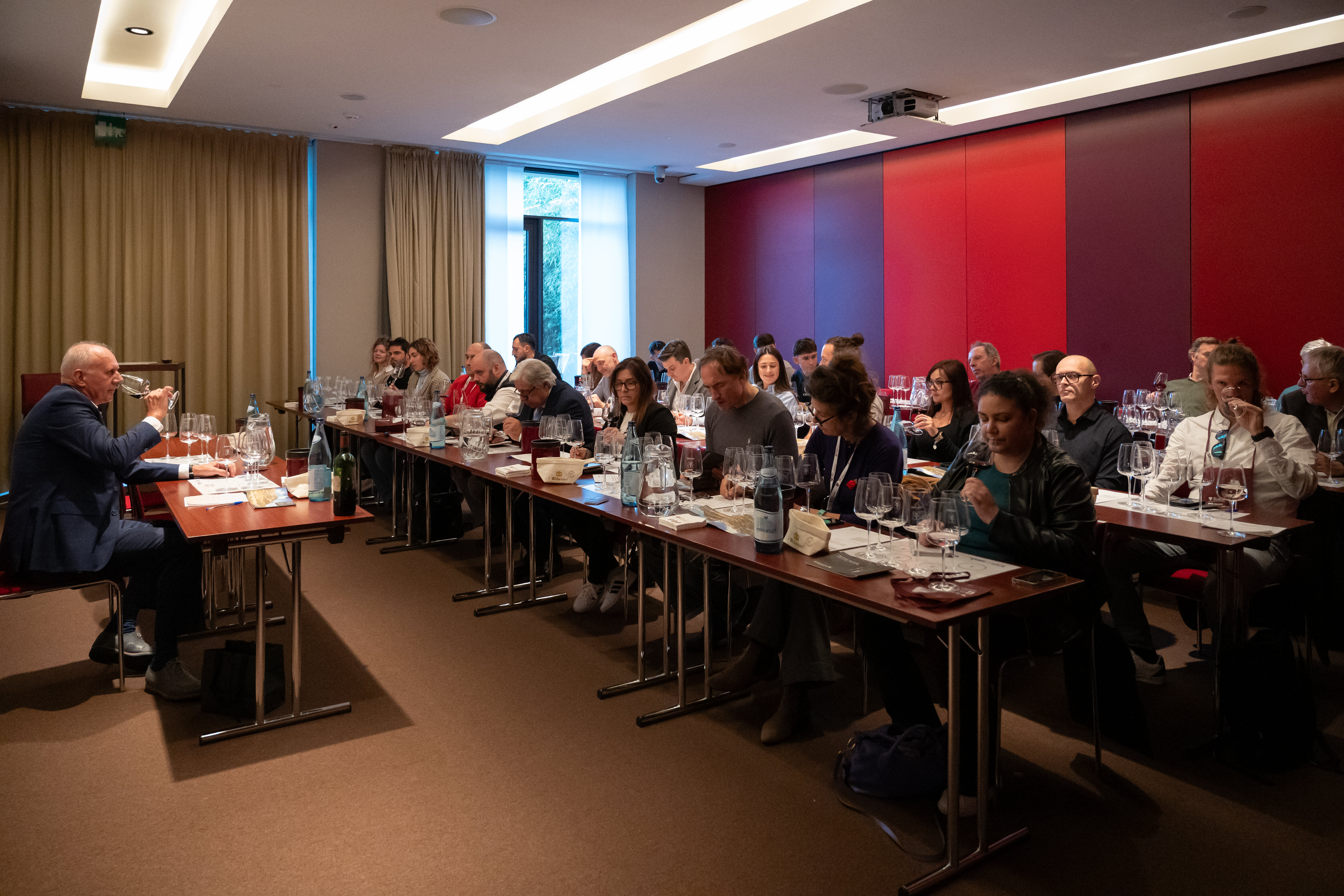
Added to this are the WineHunter masterclasses at the Hotel Therme Meran, B2B formats such as the WH Buyers’ Club and the ICE Buyers Area, as well as the Fuori Salone along Freedom Street – Merano’s red carpet for everyone who hasn’t bought a ticket. The traditional finale on Tuesday is the Catwalk Champagne&more: a day entirely dedicated to bubbles, accompanied by caviar, oysters and other gourmet specialties. And if you take a liking to a wine at a stand, you can order directly via QR code and app – bundled into one delivery.
THE SYMBIOSIS OF PLEASURE
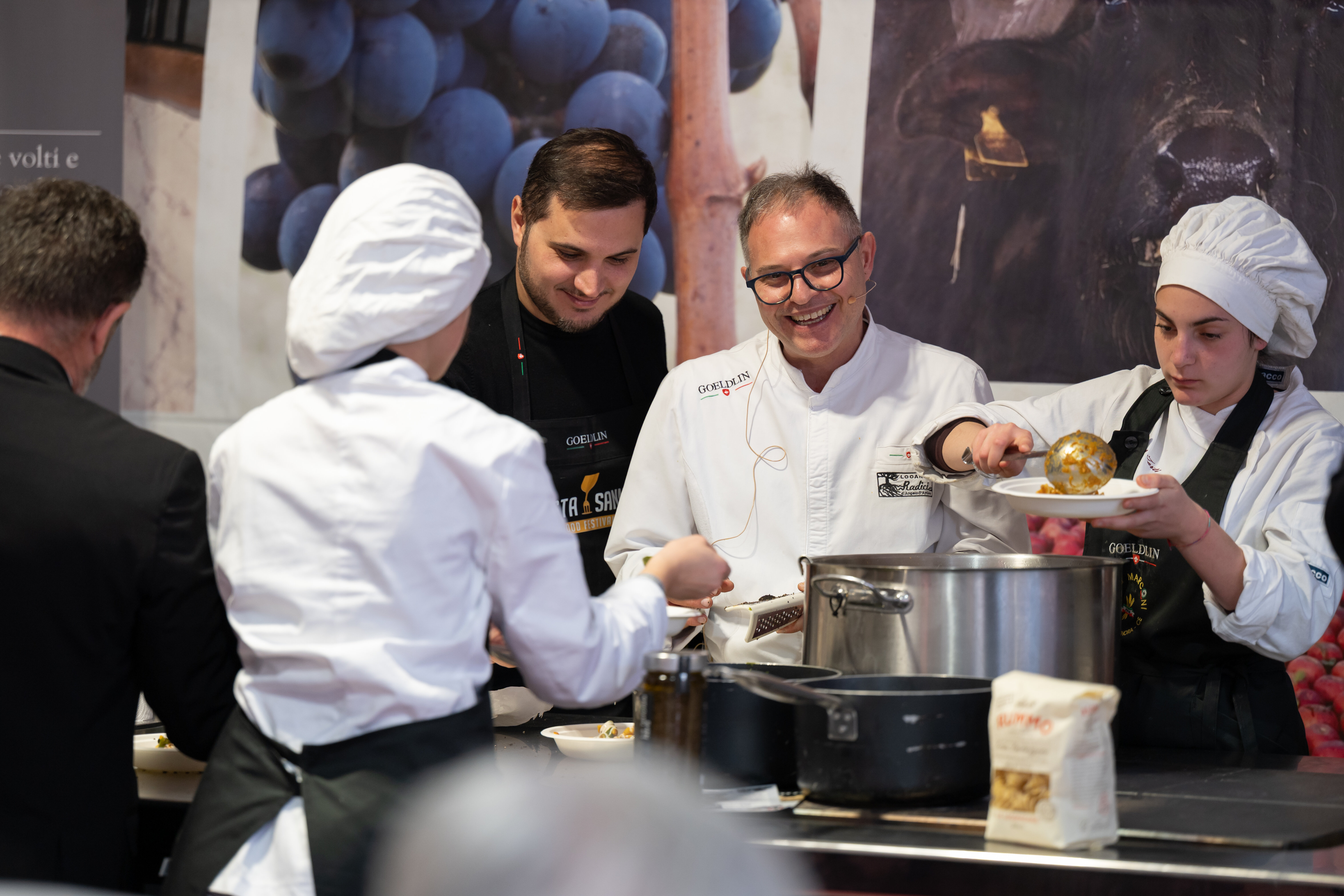
Wine alone was never enough for Köcher. Since 1996, the festival has also brought the finest foods from all over Italy to Merano, and the Guida The WineHunter commissions taste throughout the year not only wine, but also food, spirits and beer. From 6 to 9 November, around 150 producers in the GourmetArena present delicacies, craft beers and spirits, accompanied by show cooking and pairings by master hands. Entire regions appear as a united front – Campania, for instance, with its own area under the name “Campania Felix”.
Two areas deserve special attention. The WineHunter Rosé Selection is dedicated to the best rosé wines, which have long been more than a summer fling. And the new No-Low-Alcohol-Area picks up on what is currently on many producers’ minds: drinks with little or no alcohol at all. Old school and trendy drinking, side by side. Köcher counts reduced-alcohol wines among the most important trends on the market – not least because they introduce especially younger people to wine.
Where wine and cuisine meet most elegantly can be experienced on the festival’s last day: Champagne and Italian bottle fermentation with caviar and oysters. Or, as Senator Silvia Fregolent put it at the presentation in Rome: a festival that unites good food and good wine – and precisely through that becomes a place of culture.
MERANO, QUO VADIS?
Tickets for individual days as well as passes are available online at meranowinefestival.com; trade visitors can get accredited there.
Whether wine in twenty years will still be the same as today is what the new observatory is meant to find out. That it will still be drunk in Merano by then is already certain today.
Sources:
- Turismo del Gusto: Presentata al Senato la 35ª edizione di Merano WineFestival
- WineNews: Il futuro del vino di scena al Merano Wine Festival n. 35
- l’Adige: Merano WineFestival, al via la 35ª edizione
- WineNews: Merano WineFestival 2026, towards edition No. 35
- askanews/QdS: 8,000 visitors at the 34th edition
- I Grandi Vini: No-Low, amphorae and WineHunter Award
- Südtirol.live: Riesling award
- Regione Campania: Merano Wine Festival and Culinaria
Photo:: © Merano Winefestival
.jpeg "THE BEST OF THE BEST")